

Thinking about registering your business in Nigeria but not sure what a CAC certificate is? You’re not alone. Many people want to register their businesses but don’t fully understand what the CAC certificate means or how to get it.
The Corporate Affairs Commission (CAC) is the government body responsible for the registration and regulation of companies in Nigeria. A CAC certificate is an official document that proves your business is legally registered with the government. Over the years, this certificate has become an essential requirement not only for compliance but also for building trust with customers, accessing loans, and applying for contracts or grants.
In this article, we’ll break everything down for you—from what a CAC certificate is, the types available, the process of registration, how much it costs, how long it takes, and even how to retrieve a lost certificate. By the end, you’ll have a clear understanding of how to get your own CAC certificate and why it’s a smart move for any serious business owner in Nigeria.
Table of Content
What is a CAC Certificate?
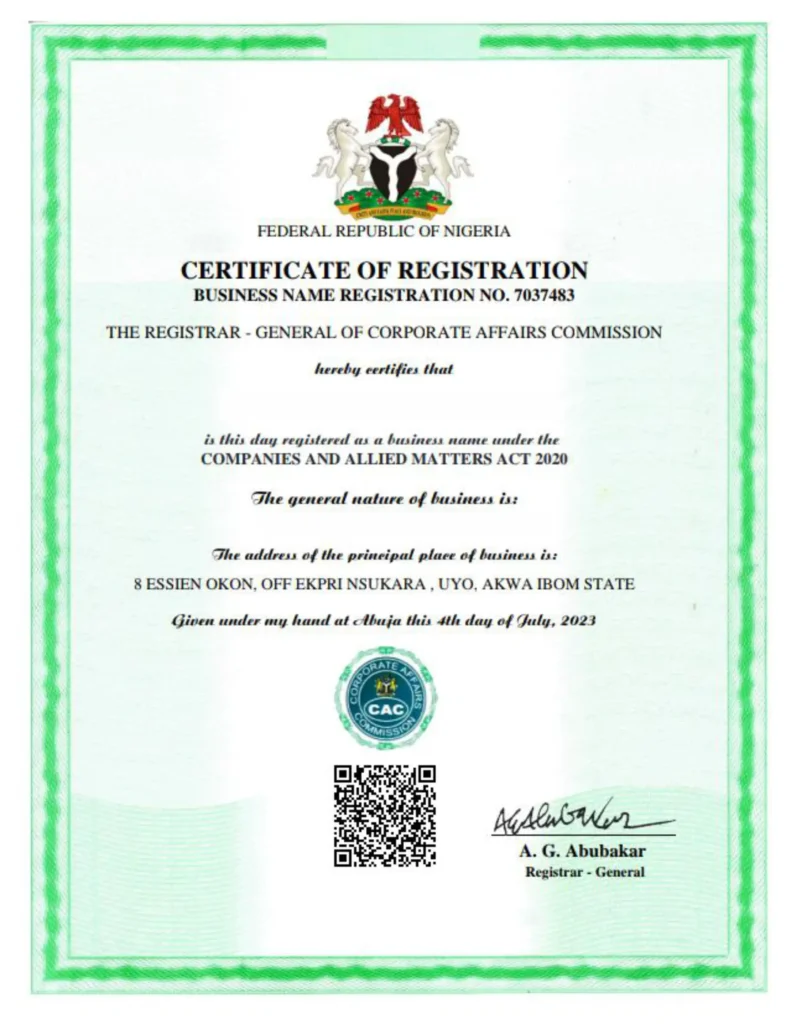
A CAC certificate is an official document issued by the Corporate Affairs Commission (CAC) in Nigeria. It serves as proof that your business has been legally registered with the government.
This certificate contains essential details such as:
- The registered name of the business
- Registration number
- Date of incorporation or registration
- Type of business entity (e.g., business name, company, or incorporated trustees)
Whether you are registering a business name, a limited liability company (LLC), or an incorporated trustee, the CAC certificate is your key to operating legally in Nigeria. Here is a Sample of CAC Certificate.
How to Get a CAC Certificate in Nigeria
Here is a step-by-step guide to obtaining your CAC certificate:
Step 1: Decide on a Business Structure
Determine the type of business you want to register. Common options include:
- Business Name (for sole proprietorships and partnerships)
- Limited Liability Company (LLC) (for small to large enterprises)
- Incorporated Trustees (for non-profit organizations)
The requirements and registration process vary depending on the structure you choose.
Step 2: Choose a Unique Business Name
Your business name must be unique and not already in use. To check name availability:
- Visit the CAC public search portal at https://search.cac.gov.ng
- Enter your desired name to see if it is available
- Reserve the name by paying the applicable fee (Tcorporate can help you handle this)
Step 3: Gather the Required Documents
For a Business Name:
- Proposed business name
- Nature of the business
- Passport photograph of the proprietor(s)
- Address of the business
For a Limited Liability Company (LLC):
- Approved business name reservation
- Names and details of directors (at least one director)
- Share capital details (minimum share capital depends on the business type)
- Identification documents (e.g., national ID, passport, or driver’s license)
- Passport photographs of directors and shareholders
For Incorporated Trustees:
- Approved name reservation
- Details of trustees (names, addresses, and identification)
- Constitution of the organization
- Minutes of the meeting where trustees were appointed
Step 4: Register Your Business Online
- Create a CAC Account: Visit the CAC registration portal at https://www.cac.gov.ng. Create an account or log in if you already have one.
- Complete the Registration Form: Fill out the form with accurate information, including the business name, address, and owner details.
- Upload Required Documents: Scan and upload all necessary documents.
- Pay the Registration Fee: Payment can be made online via the CAC portal. Fees depend on the business type.
Step 5: Submit Your Application
After completing the registration process and paying the required fees, submit your application. The CAC will review your documents, and if everything is in order, your application will be approved.
Step 6: Receive Your CAC Certificate
Once your registration is approved, you will receive an email notification. The CAC certificate can be downloaded directly from the portal. Ensure you save and print a copy for your records.
How Much Does It Cost to Get a CAC Certificate?
The cost of obtaining a CAC certificate depends on the business structure:
- Business Name: ₦10,000 (excluding other fees like name reservation and agency fees)
- Limited Liability Company: Starting from ₦50,000, depending on share capital
- Incorporated Trustees: ₦110,000 and above
Additional fees may apply for optional services like professional assistance.
Types of CAC Certificates
The type of certificate you receive depends on the kind of business entity you register:
- Business Name Registration Certificate: For sole proprietorships and partnerships
- Company Incorporation Certificate: For limited liability companies (LLCs)
- Incorporated Trustees Certificate: For non-profits, NGOs, churches, and associations
How Long Does It Take to Get a CAC Certificate?
The entire registration process typically takes between 5–10 working days, depending on the type of business and the accuracy of your documents. Name reservation may take an additional 24–48 hours.
Why is a CAC Certificate Important?
Having a CAC certificate is crucial for several reasons:
- Legal Recognition: Proves that your business is recognized by law
- Access to Bank Accounts: Required for opening a corporate bank account in Nigeria
- Credibility and Trust: Boosts credibility with clients, partners, and investors
- Access to Loans and Grants: Financial institutions require it for loans or grants
- Contract Opportunities: Required to bid for government contracts and other opportunities
How to Retrieve a Lost CAC Certificate
If your CAC certificate is misplaced, you can obtain a Certified True Copy (CTC).
Steps to Retrieve a Lost Certificate:
- Contact us at CACregistration.com via email, phone, or WhatsApp
- Submit proof of business ownership (e.g., affidavit)
- Pay the applicable fee (depends on the number of documents)
- Collect your CTC, which will be downloaded and sent electronically
Challenges You Might Encounter and How to Resolve Them
- Delayed Certificate Issuance:
- Cause: Errors in submitted documents or high application volumes
- Solution: Double-check your application and follow up with CAC customer service
- Technical Issues on the CAC Portal:
- Cause: Network glitches or server downtime
- Solution: Access during off-peak hours or seek assistance from a CAC-accredited agent
- Mismatch in Certificate Details:
- Cause: Errors in registration
- Solution: File a correction application with CAC and submit supporting documents
Why Work With Us for CAC Certificate Retrieval?
- Navigating the CAC portal and processes can be daunting
- Fast and efficient certificate retrieval services
- Expert guidance to resolve any challenges
- Assistance with corrections or replacements
Conclusion
Getting a CAC certificate is an essential step in formalizing your business in Nigeria. By following the steps outlined in this guide, you can successfully register your business and obtain your certificate without unnecessary delays. If you need assistance, consider working with professionals to simplify the process.
Frequently Asked Questions
1. Can I get my CAC certificate without visiting a CAC office?
Yes, the certificate can be downloaded online through the CAC portal after approval.
2. Can I get a hard copy of my CAC certificate?
CAC primarily issues electronic certificates, but you can print a hard copy after downloading it.
Why Do You Need TCorporate?
TCorporate provides legal advisory services to guide you through the CAC registration process. We can also handle the name search and certificate retrieval swiftly, saving you time and avoiding stress.
Contact Us
Phone: 08062348867, 09080119975, 09080119980
Visit: CAC BUSINESS REGISTRATION
Email: info@tcorporatelegaladvisory.com
There is a WhatsApp button at the bottom right. Chat with us instantly.
Disclaimer
This publication is for general guidance and does not constitute professional advice. You should not act upon the information without obtaining specific legal advice.
WRITTEN BY:
OKOLIE VICTORY N
LL.B, B.L
LEGAL ASSOCIATE
TCORPORATE LEGAL ADVISORY